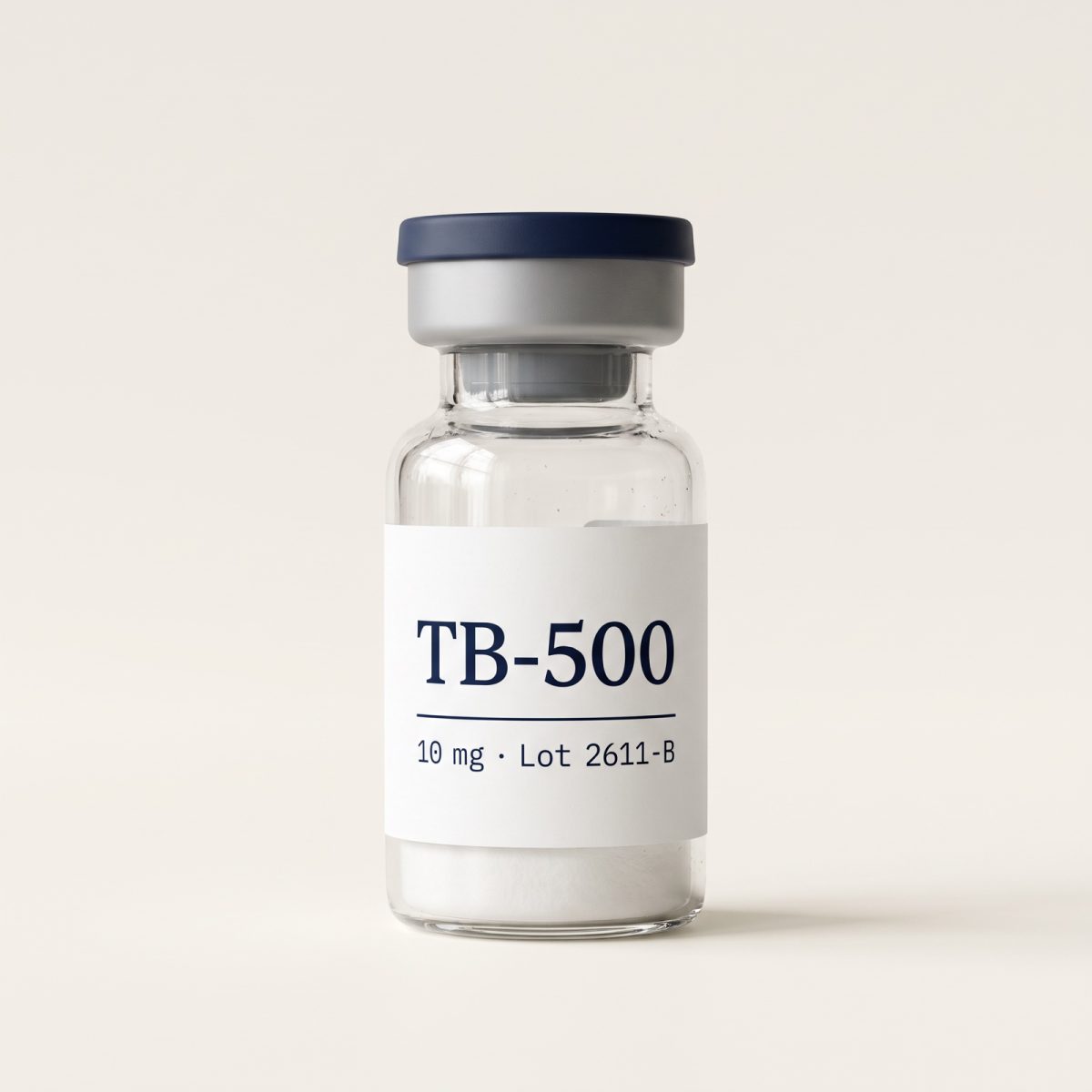
TB-500
Also known as Thymosin Beta-4 (Tβ4, TB4); TB-500 = synthetic fragment; half of the Wolverine blend
Price range: €33 through €53
Discussed for: Injury recovery, flexibility, hair.
- L
- K
- K
- T
- E
- T
- Q
- Hydrophobic
- Polar
- Positive charge
- Negative charge
- Glycine / proline
Editorial 1 to 10 estimates from published research, not measured values. How to read these
01 / Identity
What it is
TB-500 is a synthetic peptide fragment of Tβ4. Main reported uses: injury recovery, flexibility, hair. Current status: not approved anywhere. FDA flagged it as a compounding safety risk (2023).
- Molecule type
- Synthetic peptide fragment of Tβ4
- How it is taken
- Injection (SC)
- Other names
- Thymosin Beta-4 (Tβ4, TB4); TB-500 = synthetic fragment; half of the Wolverine blend
Route only. This library does not publish doses or protocols.
02 / Mechanism
How it is thought to work
Helps cells migrate to injuries, forms new blood vessels, reduces inflammation
Mechanisms seen in cells or animals do not always happen the same way in people.
03 / Potential benefits
What people use it for
Injury recovery, flexibility, hair
Limited human evidence
Small or low-quality human data. Most of what is claimed comes from animals, cells or anecdotes.
Listed uses are what people use it for, not proven outcomes.
04 / Known risks
Side effects and risks
Fatigue, headache; theoretical cancer-growth concern
Risk level 5 of 10
Moderate risk score: real side effects are known, and long-term safety is not settled.
Unknown long-term effects count as a risk, not as a clean record.
05 / Regulatory
Regulatory status
- Status
- Not approved
- Details
- Not approved anywhere. FDA flagged it as a compounding safety risk (2023)
- Sport (WADA)
- Yes: S2 (peptide hormones / GH factors)
Status reflects information up to mid-2026 and changes over time. Check current sources.
06 / Evidence quality
How good is the evidence?
Limited: animal; small human wound/eye studies with full Tβ4
07 / Notes and sources
Notes and sources
- In 2023 the FDA placed it on its list of bulk substances with significant safety concerns for compounding.
- Growth-factor peptides carry a theoretical risk of feeding existing cancers.
- Products sold online as research peptides are unregulated. Tests of such products often find wrong amounts, impurities or a different compound.
- Anyone using compounds like this regularly should have medical supervision and bloodwork (for example IGF-1, glucose and HbA1c, hormones, lipids).
- Source: Peptide Reference Table, an editorial review of published research up to mid-2026. Scores are 1 to 10 editorial estimates, not measured values. Regulatory and WADA status change over time.
Educational information only. Not medical advice. Talk to a qualified healthcare professional before using any compound.
Related compounds
-
 Animal or no human data
WADA
Recovery & Healing
KPV
Price range: €31 through €72 Read profileEffect strength3/10Proof level1/10Risk level3/10 -
 Moderate human evidence
WADA
Recovery & Healing
ARA-290
Price range: €30 through €59 Read profileEffect strength4/10Proof level5/10Risk level3/10 -
 Limited human evidence
WADA
Recovery & Healing
LL-37
Price range: €78 through €125 Read profileEffect strength4/10Proof level3/10Risk level5/10 -
 Limited human evidence
WADA
Recovery & Healing
BPC-157
Price range: €47 through €81 Read profileEffect strength5/10Proof level2/10Risk level5/10
Your history