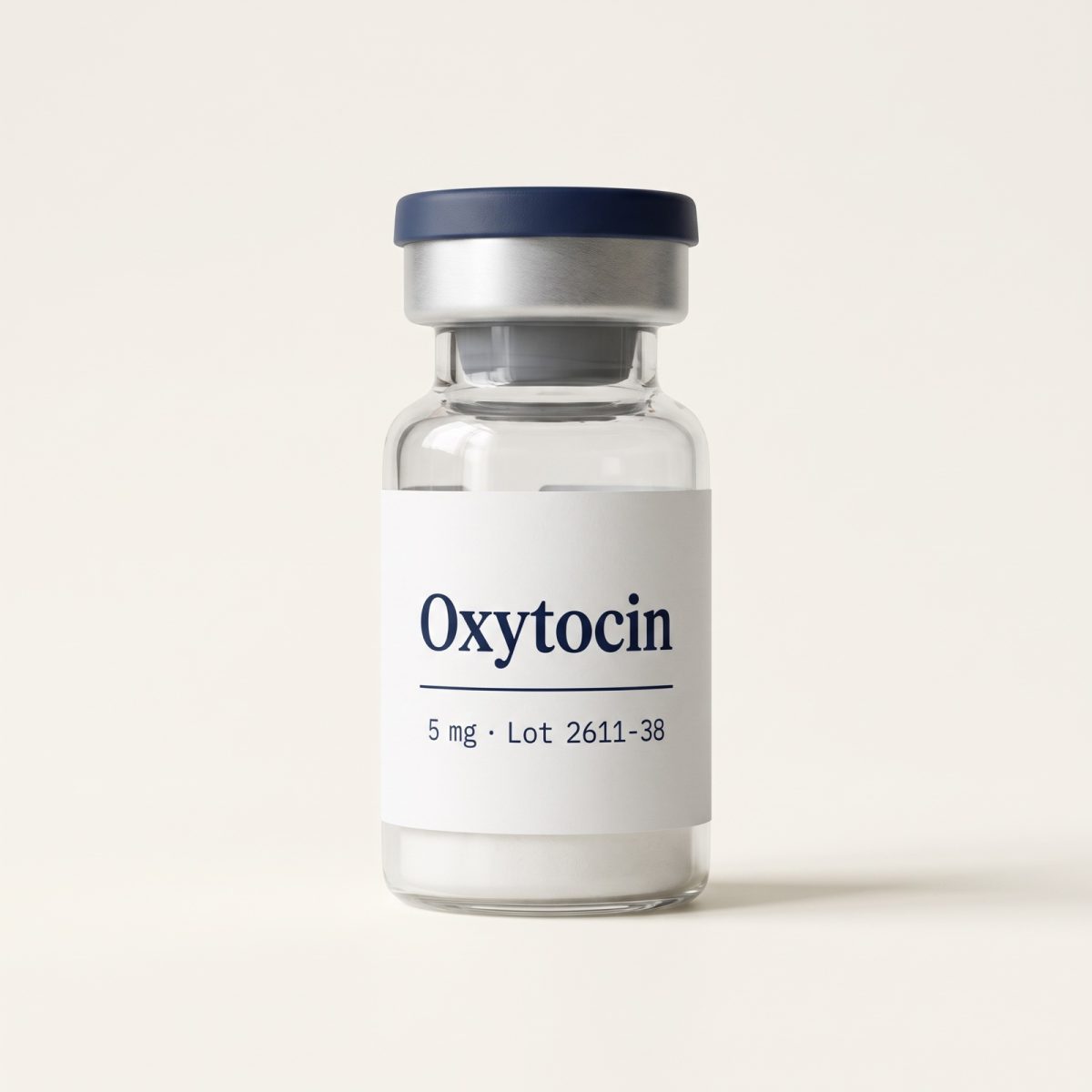
Oxytocin
Also known as Pitocin, Syntocinon, love hormone
Price range: €25 through €40
Discussed for: Bonding, mood, intimacy.
- C
- Y
- I
- Q
- N
- C
- P
- L
- G
- Hydrophobic
- Polar
- Positive charge
- Negative charge
- Glycine / proline
Editorial 1 to 10 estimates from published research, not measured values. How to read these
01 / Identity
What it is
Oxytocin is a natural nonapeptide (9 aa). Main reported uses: bonding, mood, intimacy. Current status: prescription (labor, breastfeeding); other uses off-label.
- Molecule type
- Natural nonapeptide (9 aa)
- How it is taken
- Nasal spray, injection
- Other names
- Pitocin, Syntocinon, love hormone
Route only. This library does not publish doses or protocols.
02 / Mechanism
How it is thought to work
Hormone that drives bonding, trust and social behavior
03 / Potential benefits
What people use it for
Bonding, mood, intimacy
Moderate human evidence
Some human trials exist, but they are smaller, shorter or mixed.
Listed uses are what people use it for, not proven outcomes.
04 / Known risks
Side effects and risks
Low sodium (water retention), headache
Risk level 3 of 10
Lower risk score: reported side effects are mostly mild. Low risk is not no risk, especially for unregulated products.
Unknown long-term effects count as a risk, not as a clean record.
05 / Regulatory
Regulatory status
- Status
- Approved medicine
- Details
- Prescription (labor, breastfeeding); other uses off-label
- Sport (WADA)
- Not listed
Status reflects information up to mid-2026 and changes over time. Check current sources.
06 / Evidence quality
How good is the evidence?
07 / Notes and sources
Notes and sources
- Anyone using compounds like this regularly should have medical supervision and bloodwork (for example IGF-1, glucose and HbA1c, hormones, lipids).
- Source: Peptide Reference Table, an editorial review of published research up to mid-2026. Scores are 1 to 10 editorial estimates, not measured values. Regulatory and WADA status change over time.
Educational information only. Not medical advice. Talk to a qualified healthcare professional before using any compound.
Related compounds
-
 Moderate human evidence
WADA
Growth Hormone & Muscle
Sermorelin
Price range: €48 through €92 Read profileEffect strength4/10Proof level6/10Risk level3/10 -
 Strong human evidence
Libido & Bonding
PT-141
€44 Read profileEffect strength6/10Proof level8/10Risk level4/10 -
 Limited human evidence
WADA
Recovery & Healing
BPC-157
Price range: €47 through €81 Read profileEffect strength5/10Proof level2/10Risk level5/10 -
 Limited human evidence
Non-peptide Adjuncts
NAD+
Price range: €72 through €135 Read profileEffect strength3/10Proof level4/10Risk level2/10
Your history