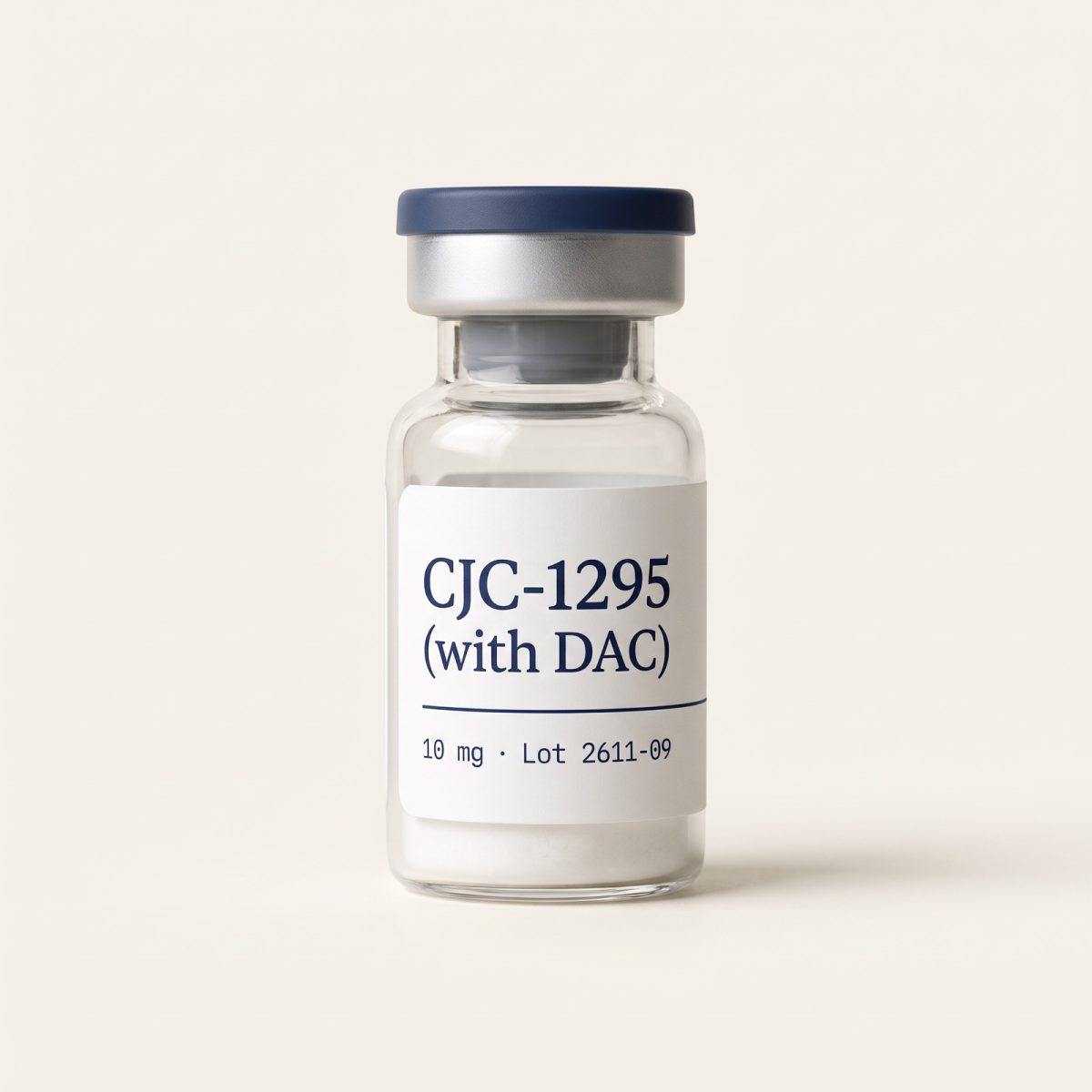
CJC-1295 (with DAC)
Also known as DAC:GRF, CJC-1295 DAC, CJC
Price range: €76 through €150
Discussed for: Raise GH and IGF-1 for muscle, fat loss, recovery.
Sequence: not listed. Modified or non-standard residues are left out on purpose.
Editorial 1 to 10 estimates from published research, not measured values. How to read these
01 / Identity
What it is
CJC-1295 (with DAC) is a synthetic GHRH analog (30 aa + DAC). Main reported uses: raise GH and IGF-1 for muscle, fat loss, recovery. Current status: not approved anywhere. FDA flagged it as a compounding safety risk (2023).
- Molecule type
- Synthetic GHRH analog (30 aa + DAC)
- How it is taken
- Injection (SC)
- Other names
- DAC:GRF, CJC-1295 DAC, CJC
Route only. This library does not publish doses or protocols.
02 / Mechanism
How it is thought to work
GHRH analog that makes the pituitary release more GH for days (long half-life)
Mechanisms seen in cells or animals do not always happen the same way in people.
03 / Potential benefits
What people use it for
Raise GH and IGF-1 for muscle, fat loss, recovery
Limited human evidence
Small or low-quality human data. Most of what is claimed comes from animals, cells or anecdotes.
Listed uses are what people use it for, not proven outcomes.
04 / Known risks
Side effects and risks
Water retention, flushing, numb hands, raised blood sugar; one death in a trial participant (cause unclear)
Risk level 6 of 10
Moderate risk score: real side effects are known, and long-term safety is not settled.
Unknown long-term effects count as a risk, not as a clean record.
05 / Regulatory
Regulatory status
- Status
- Not approved
- Details
- Not approved anywhere. FDA flagged it as a compounding safety risk (2023)
- Sport (WADA)
- Yes: S2 (peptide hormones / GH factors)
Status reflects information up to mid-2026 and changes over time. Check current sources.
06 / Evidence quality
How good is the evidence?
07 / Notes and sources
Notes and sources
- In 2023 the FDA placed it on its list of bulk substances with significant safety concerns for compounding.
- Growth-factor peptides carry a theoretical risk of feeding existing cancers.
- Products sold online as research peptides are unregulated. Tests of such products often find wrong amounts, impurities or a different compound.
- Anyone using compounds like this regularly should have medical supervision and bloodwork (for example IGF-1, glucose and HbA1c, hormones, lipids).
- Source: Peptide Reference Table, an editorial review of published research up to mid-2026. Scores are 1 to 10 editorial estimates, not measured values. Regulatory and WADA status change over time.
Educational information only. Not medical advice. Talk to a qualified healthcare professional before using any compound.
Related compounds
-
 Moderate human evidence
WADA
Growth Hormone & Muscle
Sermorelin
Price range: €48 through €92 Read profileEffect strength4/10Proof level6/10Risk level3/10 -
 Limited human evidence
WADA
Growth Hormone & Muscle
Ipamorelin
Price range: €36 through €71 Read profileEffect strength5/10Proof level3/10Risk level3/10 -
 Limited human evidence
WADA
Growth Hormone & Muscle
Mod GRF 1-29
Price range: €31 through €65 Read profileEffect strength5/10Proof level3/10Risk level4/10 -
 Strong human evidence
WADA
Growth Hormone & Muscle
Tesamorelin
Price range: €54 through €88 Read profileEffect strength6/10Proof level9/10Risk level4/10
Your history